
There are messages you typed and never sent—those unfinished goodbyes, silent confessions, or unspoken “I miss you” texts.
The Unsent Message Project transforms those moments of hesitation into art, emotion, and connection. It’s a digital haven where people across the world share unsent messages—words written from the heart but left unspoken.
In a world where we overshare everything, this project stands out because it gives voice to the things we don’t say. It captures raw emotion, heartbreak, hope, and closure in their purest forms.
This article dives deep into what the Unsent Message Project is, how it works, why millions are drawn to it, and how it became a cultural symbol of modern vulnerability.

What Is the Unsent Message Project?
The Unsent Message Project is a global digital art and emotional healing initiative that allows people to anonymously share text messages they never sent. These are heartfelt notes to lovers, family members, friends, or even themselves.
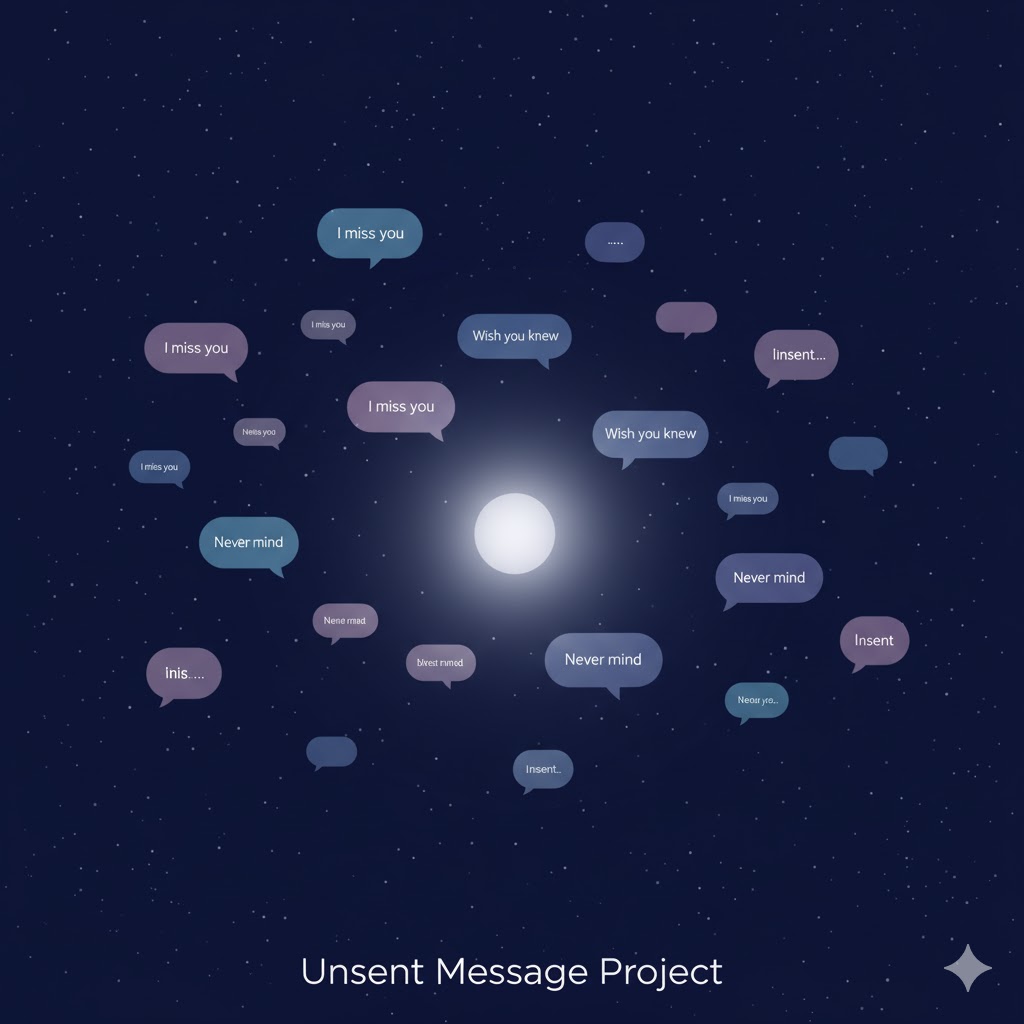
Each message is color-coded based on emotion—red for love, blue for sadness, green for hope, yellow for nostalgia, black for grief. Together, these colors form a vast digital mosaic of human feeling.
Originally created by artist Rora Blue in 2015, the Unsent Message Project began as a physical collage of messages written by strangers. Today, it has evolved into a living digital archive containing over 5 million submissions from around the world.
The project isn’t just about reading words—it’s about feeling them. Every unsent message carries the echo of something unfinished: a relationship, a thought, a chapter.
The Story Behind the Unsent Message Project
Behind every major movement lies a spark of personal pain and curiosity.
Rora Blue, a queer, disabled conceptual artist, launched the Unsent Message Project as a way to process her own unsent emotions—words she couldn’t bring herself to send.
It started small: a few messages written by friends, each paired with a color that represented how they felt about their first love. Then, submissions began flooding in from across continents.
By 2016, the project had collected 28 thousand messages; by 2025, over five million. The Unsent Message Project became a mirror of our generation’s unspoken stories—proof that vulnerability connects us more deeply than perfection ever could.
Why the Unsent Message Project Resonates with Millions
1. The Power of Saying the Unsayable
Sometimes we hold back because we fear rejection, regret, or misunderstanding. The Unsent Message Project allows you to say it anyway—without judgment or consequence.
2. Emotional Release Through Anonymity
You can express heartbreak, apology, love, or anger freely. No names, no exposure, just truth. That’s why so many call the Unsent Message Project their “digital confession box.”
3. A Global Sense of Connection
Every time someone reads your unsent message, they might think, “This sounds like me.” That recognition creates a sense of belonging. The Unsent Message Project is proof that no one’s pain—or love—is unique to them alone.
4. A New Kind of Art
It’s not just emotional therapy—it’s art. The Unsent Message Project turns text into color, emotion into design, private feelings into public expression. It’s where technology and humanity meet.
How the Unsent Message Project Works
The structure of the Unsent Message Project is simple—but deeply meaningful.
Step 1: Write Your Unsent Message
You visit the project’s submission page. Write a short message—something you wanted to say but never did. It could be addressed to your ex, your mother, your childhood friend, or even yourself.
Examples:
“I hope you still think of me sometimes.”
“I forgive you, even if you never asked.”
“I’m sorry I wasn’t braver.”
Step 2: Choose a Color That Matches Your Emotion
This color represents how you feel about the person or situation. Red might mean passion or anger. Blue often symbolizes sadness. Yellow radiates nostalgia. Green might express renewal or hope.
Step 3: Submit It Anonymously
No identity, no email, no risk. Your words join thousands of others in a searchable archive.
Step 4: Browse and Reflect
You can search by name, by color, or just scroll endlessly through messages written by strangers. It’s emotional archaeology—digging through fragments of people’s hearts.
The Psychology Behind the Unsent Message Project
The act of writing something you never send has real psychological benefits. Therapists call it expressive writing, and studies show it reduces stress, anxiety, and emotional rumination.
Writing unsent messages externalizes feelings. Instead of letting thoughts swirl endlessly in your head, you give them shape, words, and boundaries. The Unsent Message Project takes that process public—making personal healing a shared experience.
Many participants report a sense of emotional clarity after submitting their unsent messages. They understand what they felt, what they wanted, and sometimes, what they’ve outgrown.
This is why the Unsent Message Project isn’t just an art platform—it’s emotional therapy disguised as creativity.
The Role of Color in the Unsent Message Project
Colors are the heartbeat of the project. They transform each message from simple text into an emotional signature.
Red: love, passion, anger, intensity
Blue: sadness, calm, nostalgia
Yellow: hope, longing, warmth
Green: healing, renewal, new beginnings
Black: grief, closure, endings
Purple: confusion, transformation
Every hue adds another layer of meaning. The Unsent Message Project uses this palette to visualize emotion—proof that feelings have color, texture, and temperature.
When you scroll through the archive, you don’t just read; you see how love looks when it fades, how pain looks when it cools, and how hope glows softly in green.
The Emotional Impact of the Unsent Message Project
The Unsent Message Project has become a safe digital space for anyone who’s ever had too much to say and no one to say it to.
For many, submitting a message feels like closing a chapter. For others, it’s about keeping a memory alive.
Each message becomes part of something bigger—a communal diary of human emotion. You might cry, smile, or feel relief. That’s the power of words left unsent.
People visit the site at 2 a.m. when they can’t sleep, after breakups, before therapy sessions, or when nostalgia hits hard. The archive becomes both a friend and a mirror.
Unsent Message Project vs Private Journaling
While private journaling is personal and confidential, the Unsent Message Project adds a layer of shared humanity.
Journaling
Private, seen by no one
Safe for full honesty
Helps process thoughts internally
Unsent Message Project
Anonymous but public
Shared emotional connection
Contributes to a global art movement
Both are healing, but the Unsent Message Project adds the beauty of being seen—even if no one knows it’s you.
The Unsent Message Project as a Digital Museum of Feelings
In many ways, the Unsent Message Project functions like an emotional museum. Each message is a tiny exhibit of vulnerability. Together, they paint the full spectrum of human emotion.
The archive documents heartbreak, joy, apology, confusion, gratitude, and healing—each frozen in a short unsent message.
And because submissions come from more than 100 countries, the Unsent Message Project also becomes an anthropological record of modern love and loss.
We live in a time where everything is fleeting, but these unsent messages endure. They remind us that emotions deserve permanence too.
Real Stories from the Unsent Message Project
Some of the most powerful messages come from everyday people who finally found a way to express what haunted them.
A user once wrote:
“I still wear your sweatshirt when I’m sad. I hope you’re warm too.”
Another shared:
“You said I’d never move on. I did, but sometimes I wish I hadn’t.”
And one said:
“If I had told you how much I cared, maybe you’d still be here.”
Every submission feels like a heartbeat—brief, fragile, but real.
That’s the essence of the Unsent Message Project: collective empathy through anonymous storytelling.
Why People Write Unsent Messages
People turn to the Unsent Message Project for different reasons:
Healing
Sometimes closure doesn’t come from conversation—it comes from writing. Putting feelings into words helps release emotional weight.
Love
Unsent love messages are among the most common. People write what they were too afraid to say—“I love you,” “I miss you,” “I wish it worked out.”
Grief
For those who’ve lost someone, unsent messages become digital memorials. Writing “I hope you’re at peace” becomes part of the healing journey.
Forgiveness
Unsent apologies or forgiving words help people let go of resentment.
Gratitude
Many messages simply say thank you—for love, friendship, or kindness once given.
In all cases, the Unsent Message Project becomes a space to unload what the heart has been carrying quietly.
Cultural Impact of the Unsent Message Project
The project’s influence has extended beyond the internet. It’s been featured in galleries, therapy discussions, and social-media trends.
Young adults, artists, and mental-health advocates see the Unsent Message Project as a safe digital confessional. It’s not performative—it’s profoundly authentic.
More than that, it’s inspired copycat projects, writing challenges, and art installations worldwide. The concept of “unsent letters” is no longer niche; it’s a universal language of emotion.
Through the Unsent Message Project, we’ve learned that unspoken words still have a place in the world—they just need the right medium.
The Healing Science Behind Unsent Messages
Psychologists have studied how writing unsent letters or messages benefits mental health.
They found that expressing bottled-up emotions in writing:
Lowers cortisol (stress hormone)
Improves emotional regulation
Enhances empathy and self-understanding
The Unsent Message Project amplifies that therapeutic benefit by giving people a creative outlet.
For example, one participant shared that writing a message to her estranged sister on the platform helped her finally let go of anger. Another wrote that reading strangers’ unsent messages made him realize he wasn’t alone in heartbreak.
When vulnerability meets anonymity, healing begins.
Emotional Risks and Ethical Considerations
The Unsent Message Project is deeply healing for many—but not without caution.
Writing or reading unsent messages can trigger painful memories. Some users report emotional overwhelm or nostalgia spirals. It’s important to practice emotional grounding after engaging with the archive.
Ethically, while messages are anonymous, some include identifying details. Always be mindful of privacy—both yours and others’. The beauty of the project lies in universal emotion, not specific identities.
The creators also emphasize that the Unsent Message Project is not therapy, but a tool for reflection. For deep trauma, professional help remains vital.
The Future of the Unsent Message Project
As technology evolves, so does the project.
The next phase of the Unsent Message Project might include:
AI-driven emotional analysis (detecting themes in messages)
VR galleries of color-coded emotions
Local exhibitions combining audio and text messages
Collaborations with mental-health organizations
Even now, developers and artists are inspired by the project’s format, creating mini-platforms for unsent notes, anonymous confessions, and digital diaries.
The core idea—that emotions left unsaid still matter—will always remain timeless.
How to Write Your Own Unsent Message
Want to try it yourself? Here’s how to write a message that heals instead of hurts.
Set an intention – What’s the purpose? Closure? Forgiveness? Expression?
Be honest – Don’t filter yourself. The message is for you.
Keep it short – Brevity brings clarity. One sentence can hold an entire story.
Choose your color – Let the emotion guide your choice.
Release it – Post it anonymously or keep it in your notes. What matters is the act of letting it out.
Once you’ve written it, you’ll notice something shift inside. Relief, lightness, understanding. That’s the quiet power behind the Unsent Message Project.
Why the Unsent Message Project Matters in the Digital Era
We live in an age of instant communication—DMs, voice notes, typing indicators. Yet so many things remain unsaid.
The Unsent Message Project reminds us that silence can also be meaningful. It teaches us to sit with our emotions rather than rushing to send them.
In a culture obsessed with likes and replies, it’s revolutionary to write something expecting no response.
Maybe that’s why it resonates so deeply—it’s pure expression, untouched by validation.
FAQs About the Unsent Message Project
Yes. You can explore the archive by name, color, or emotion. Many users browse just to feel connection with others’ stories.
Final Thoughts: The Beauty of What’s Unsaid
The Unsent Message Project is more than a website—it’s a living monument to everything we never said. It’s where silence becomes art and emotion becomes connection.
Every message, whether it’s “I’m sorry,” “I still miss you,” or “Thank you for existing,” adds one more piece to humanity’s shared puzzle of feeling.
Maybe the w/ords we never sent matter most—because they show what our hearts truly wanted to say, before fear or pride stepped in.