What Is The Unsent Project? – The Story Behind Unsent Messages
Ever typed out a text that felt like it held your whole heart—maybe a shaky “I’m sorry” or a quiet “I still think of you”—only to hover over the send button, then hit delete? Those words don’t just vanish; they stick with you, heavy and restless. That’s where the Unsent Project steps in, a digital haven that scoops up those unsent messages and gives them a home—a kind of quiet, anonymous museum where your unspoken thoughts can breathe, seen but shielded. If you’re wondering, “What is the Unsent Project, exactly?” you’re not alone, and I’m here to walk you through it like a friend spilling the tea.
This piece is your deep dive into what makes the Unsent Project tick: its roots, how it works, why it’s got this magnetic pull, and how you can dip your toes in—whether you’re dropping your own secret note or just scrolling through others’ ghosts. We’ll unpack its origin story, the nuts and bolts of submitting and browsing, the emotional gut-punch it delivers, its place in the bigger cultural convo, and some practical tips for jumping in without losing your balance. By the end, you’ll not only know what the Unsent Project is but also whether it’s got a place in your world.
The Origin Story: How the Unsent Project Began
To really get what the Unsent Project is, let’s rewind to 2015, when artist Rora Blue cooked up something simple but seismic. She asked folks to share a message they never sent to their first love, paired with a color that captured the vibe of that memory—red for passion that burned too bright, blue for the ache that lingers. What started as this artsy experiment, a kind of love-letter time capsule, blew up fast. People didn’t just send a few notes; they flooded the gates, pouring out millions of unsent truths that now stack up in an archive that’s less a website, more a global diary.
When you ask what the Unsent Project is, that spark matters: It wasn’t born to chase clout or go viral like some TikTok trend. It was art—raw, curious, about love and loss and the colors we see when we close our eyes. That root, that mix of heart and hue, turned a quirky idea into a cultural juggernaut, a place where the unsaid gets to speak without shouting. By 2025, it’s claimed to hold millions of entries from every corner of the globe, proof it’s no fleeting sketch but a living, breathing canvas of what we hold back.
How the Unsent Project Works: Submission, Color, Search
Okay, so what is the Unsent Project when you strip it to its gears? It’s a platform that’s as simple as it is soul-stirring, built for anyone who’s ever typed a text and bailed. Here’s how it rolls.
Submitting your message: You swing by the Unsent Project’s site, and it’s just you, a blank field, and your truth. Write that note you never sent—maybe “To Sam… I wish I’d fought harder” or something vague but heavy. Pick a color that feels right for the feeling—blue for the blues, green for a flicker of hope—and hit submit, no name needed. It’s anonymous, raw, ready to slip into the ether after a quick moderation check.
Archiving and browsing: Once it’s green-lit (could take days, fair warning), your words join the archive, a sprawling sea of other unsent whispers. You can search by name—yours, theirs, anyone’s—or sift through colors to chase a mood. Suddenly, you’re swimming in thousands of messages, each a tiny window into someone else’s pause. That’s the Unsent Project in action, alive and clickable.
Color system as emotional code: The colors aren’t just pretty; they’re the heartbeat. Asking what the Unsent Project is means grasping this: The hue you pick—red for love that scorched, yellow for nostalgia’s soft glow—carries your emotion before the words even land. It’s like a mood ring for your message, turning a text into a painting. Together, this setup makes the Unsent Project less a database, more a gallery where feelings hang like art, searchable and shared.
Why People Use the Unsent Project: The Emotional Logic
To really nail what the Unsent Project is, you’ve gotta get why it pulls people in like a late-night confessional. It’s not just a site; it’s a lifeline for the stuff we can’t say out loud.
Safe expression of unsent truths: We’ve all been there—typing a text that could change everything, then freezing. Fear of a fight, a ghosting, or just not knowing how it’ll land stops us cold. The Unsent Project says, “Write it anyway.” It’s a safe corner to spill without the stakes, honoring that draft you deleted at 2 a.m.
Shared vulnerability and non-judgment: Scroll through, and you’ll see lines like “I never said I loved you” or “Thanks for holding me together.” It’s like finding your own heart echoed in a stranger’s hand. That’s the Unsent Project’s magic—knowing others held back too makes your silence feel less like a solo act.
Emotional release and reflection: Putting those words down, even if they never reach their mark, lifts a weight. Submitting to the Unsent Project, letting it go public but nameless? That’s a quiet exhale, a way to close a chapter without opening a fight. Users say it’s like shedding armor they didn’t know they wore.
Cultural resonance: In a world where we’re always texting, tweeting, posting, the unsent stuff still screams loudest. The Unsent Project flips those “failures” into something fierce, giving our digital silences a stage. That’s what makes it more than a site—it’s a mirror for the modern heart.
What the Archive Looks Like: Themes, Texts and Patterns
So, what is the Unsent Project when you peek inside? It’s a mosaic of human ache, stitched from recurring threads that hit you where you live.
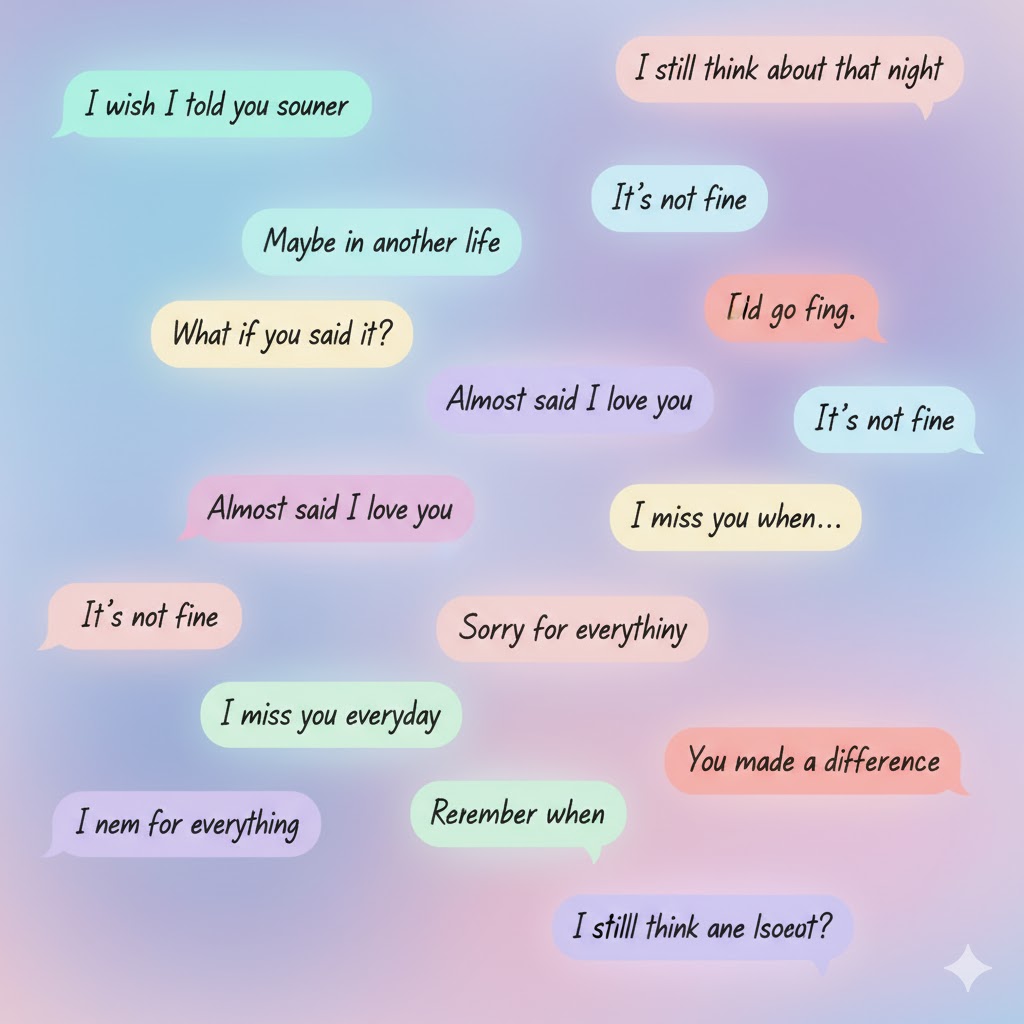
You’ll spot first loves and early heartbreaks: “To Jess… your laugh’s still stuck in my head,” capturing that first crush that never quite fades.
Gratitude that stayed silent sneaks in: “If I’d just said thanks one more time for saving me.”
Apologies that never landed: “I’m sorry I ghosted when you needed me most.”
Goodbyes left hanging: “I should’ve said farewell that night, not just walked away.”
And nostalgia’s bittersweet hum: “You’re gone, but I still play your old playlist.”
These aren’t just random lines; they’re patterns that bind us, proof your unsent draft isn’t yours alone. The colors amplify it—black for the heavy grief, yellow for the warm sting of memory, green for the slow sprout of hope. Browsing by hue feels like sorting through emotions, not just words, making the Unsent Project a living map of what we couldn’t say.
Credibility: Is the Unsent Project Real? How Authentic Is It?
When folks ask what the Unsent Project is, they often tack on, “Is it legit?” Straight up: Yes, it’s real, alive, and kicking in 2025. You can hit the site, search a name, filter by color, drop your own note—it’s as tangible as your phone. Rora Blue’s name is tied to it, and outlets like Vogue and BuzzFeed have nodded its way, calling it a cultural pulse, not a prank.
But real doesn’t mean perfect. The anonymity’s a double-edged sword—every message is a stranger’s truth, but you can’t verify if it’s their heart or a clever copy-paste. Some grumble about moderation lags, where their submission sits in limbo or never surfaces. Still, the archive’s there, millions deep, searchable, and growing. So, what is the Unsent Project? It’s a real-deal platform, messy in the best human way—authentic, even if every line’s story isn’t provable.
Impact and Culture: What the Unsent Project Means in the Larger Conversation
Digging deeper into what the Unsent Project is, you hit its bigger why: It’s not just a corner of the internet; it’s a cultural gut-check, a space where our silences get to sing.
It’s a digital museum, hauling unsent drafts from your phone’s shadows into a spotlight where they’re seen, not sent.
It’s a communal exhale—drop your truth, read another’s, feel the weight of “me too” settle in, knowing your quiet’s got company.
It sparks chats about why we choke on words—what stops us, what regret costs, what courage looks like in a text bubble.
And it’s art in motion: Rora Blue’s color-coded vision turned a personal probe into a global canvas, where messages aren’t just data but a medium for meaning.
Asking what the Unsent Project is means seeing it as a stage for the stuff we bury, a proof that our unsent texts aren’t failures—they’re fragments of who we are.
Practical Use: How to Engage with the Unsent Project
Want to get hands-on with what the Unsent Project is? Here’s your playbook, whether you’re lurking, spilling, or spinning it creative.
To browse: Hit the site, find the archive, and play. Type a name—yours, a ghost’s—or filter by color for a mood dive. Let the words wash over you, not as a hunt for “your” message but a mirror for your own unsaid.
To submit: Carve out a quiet minute, write that text you never sent—short, real, raw. Pick a color that hums with your heart, submit it nameless, and brace for the moderation wait. Once it’s live, it’s part of the tapestry.
For creative use: Steal the vibe—use “unsent messages” as a prompt for poems, journal entries, or group workshops. Ask, “What’s my unsent story?” and let it spark something new.
For emotional reflection: Write your draft, read a stranger’s, see the threads—regret, love, loss—that tie you to others. It’s like finding your ache in a crowd, less lonely for it.
That’s the Unsent Project in your hands—not just a site, but a tool to unpack what’s tucked away.
Ethical Considerations and Privacy: What the Unsent Project Requires
Since what the Unsent Project is hinges on raw feelings and no names, there’s a responsibility to tread light.
Your words go public, but your name stays hidden—still, skip details that could out you or someone else, unless you’re cool with the world peeking.
Searching your name? It’s tempting, but those hits aren’t proof of your story—don’t let a match spiral into obsession.
If you’re wobbly, the archive’s heavy heart can tip you further; scroll with care, maybe with a friend’s voice on speed-dial.
And no, it’s not therapy—cathartic, sure, but if you’re wrestling big demons, a pro’s ear beats a digital drop.
These guardrails keep the Unsent Project a safe harbor, not a storm, for diving into what it really is.
Myths vs Reality: Clearing Up What the Unsent Project Is Not
To pin down what the Unsent Project is, let’s clear the fog on what it isn’t, so you don’t trip on false hopes.
It’s not a secret postman—your “To Emma…” stays in the archive, not her inbox; it’s for you, not delivery.
It’s not Tinder 2.0—no hookups, no DM slides, just anonymous echoes.
It’s not instant magic—your message might sit in review, or you might not find the one you’re chasing; it’s a slow burn, not a slot machine.
It’s not a shrink’s couch—feels good to spill, but it’s no fix for deep cuts.
Knowing these keeps your take on what the Unsent Project is grounded, not chasing ghosts.
The Future of the Unsent Project: What Might Come Next
So, what is the Unsent Project as it stretches forward? It’s got room to grow, and the possibilities feel alive in 2025.
Smarter sifts—filters for moods, places, or ties, so you can zero in on “blue regrets from ’22.”
Mobile apps to make midnight submissions or quick scrolls as easy as a text.
Art-world hookups—museums or galleries turning digital drops into physical exhibits.
Therapy tie-ins—workshops or prompts weaving unsent vibes into healing practices.
Or research dives—psych nerds unpacking why we hold back, fueled by the archive’s millions.
As long as we’re typing and deleting, the Unsent Project’s got legs, ready to evolve with every unsent ache.
FAQs about What is the Unsent Project
What is the Unsent Project?
It’s a digital vault, born in 2015, for anonymous unsent texts—love notes, apologies, regrets you typed but never sent. Pick a color for the vibe, drop it in, and join a global archive where silence speaks.
Who Created the Unsent Project?
Rora Blue, an artist with a knack for the heart’s quiet corners, kicked it off as a probe into first loves and their colors. It grew into a worldwide echo of unsaid words.
How Does Submission Work?
Write your unsent note—short, real, maybe “To Mia… I’m sorry I left.” Choose a color that fits, submit it anonymously, and wait for moderation. Once live, it’s in the archive for all to see.
Is the Unsent Project Safe and Anonymous?
Yup, no names needed—your words fly free, identity locked. But they’re public, so blur specifics if you’re private. Safe-ish, but scroll with care; it’s heavy stuff.
Will My Message Be Delivered to the Person I Originally Wanted to Send It To?
Nope—it’s not a courier. Your words stay in the archive, browsable but not mailed. It’s for your release, not their inbox.
Why Do People Browse the Unsent Project Archive?
To feel less alone—seeing others’ unsent “I miss you”s or “sorry”s is like finding kin in a crowd. It’s solace, a mirror, a nod to your own drafts.
Can I Delete a Message After Submitting?
Not really—once it’s in, it’s likely there for keeps. Check the terms, but write like it’s forever.
Final Reflections: Answering “What is the Unsent Project” Today
So, what is the Unsent Project, really? It’s not just a website where you dump unsent texts—it’s a living, pulsing archive of the stuff we feel but don’t say, a place where silence gets a megaphone. It’s a crowd of nameless voices shouting whispers, a gallery where your “almost sent” hangs like art, a mirror showing your heart’s not the only one holding drafts.
If you’ve got a message you typed and trashed—love, regret, a thank-you too big for words—the Unsent Project’s your space to let it live. Submit it, browse it, or just nod at its existence; it’s proof your unsent isn’t unseen. That’s the power here: Turning the quiet into something loud, the hidden into something held. Now you know what the Unsent Project is—and maybe, just maybe, why it’s calling your name.